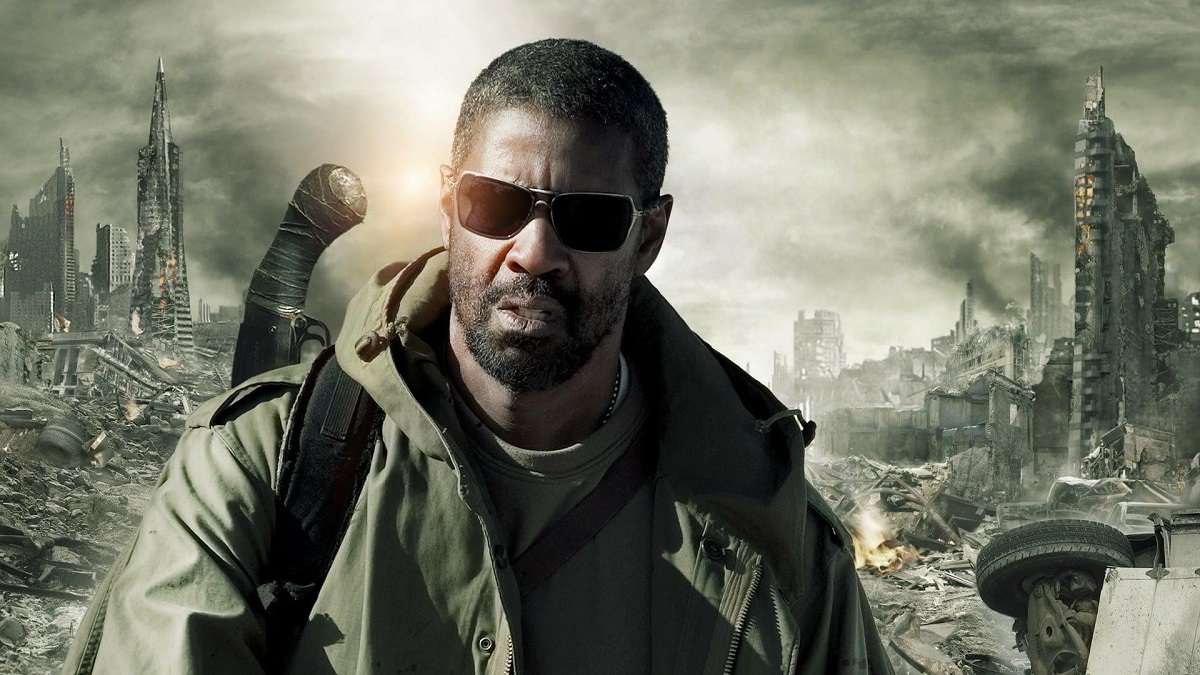
When it comes to the post-apocalyptic science fiction genre, few films have managed to capture the sheer desolation and spiritual endurance of humanity quite like the 2010 masterpiece, ‘The Book of Eli’. Directed by the visionary Hughes brothers (Albert and Allen Hughes), the film is a masterclass in visual storytelling, blending gritty, hard-hitting action with profound philosophical and religious undertones.
Featuring powerhouse performances by Academy Award-winner Denzel Washington and the legendary Gary Oldman, the movie paints a haunting picture of a ruined America. However, beyond the gripping narrative and intense character dynamics, it is the film’s sprawling, scorched-earth aesthetic that truly steals the show. The vast, sun-bleached wastelands, devoid of the familiar chaos of urban life, leave audiences asking one major question: Where exactly was this visually stunning movie filmed?
If you are a fan of dystopian cinema, breathtaking cinematography, and behind-the-scenes Hollywood magic, you are in the right place. In this comprehensive guide, we will dive deep into the gripping plot, the intense production process, and the striking, real-world Southwestern locations that brought the desolate world of ‘The Book of Eli’ to life.
The Premise: A Journey Through a Scorched Earth
Before we explore the physical locations, it is crucial to understand the dark, atmospheric world the filmmakers were trying to create. The story is set thirty years after an apocalyptic event referred to simply as “The Flash”—a cataclysmic nuclear war that tore a hole in the ozone layer, scorching the Earth and completely decimating modern civilization.
In this ruthless, dog-eat-dog wasteland, we meet Eli (Denzel Washington), a solitary, highly skilled survivor and nomad. Eli is on a mysterious, divinely inspired mission, walking westward across the ruined landscape of the former United States. He is the guardian of a locked, leather-bound book—the last known copy of the King James Bible. In a world where humanity has lost its moral compass, this book represents the ultimate secret to human recovery, spiritual rebirth, and the rebuilding of society.
Eli’s arduous journey is interrupted when he arrives in a makeshift, dilapidated settlement run by the ruthless and intelligent warlord, Carnegie (Gary Oldman). Carnegie is an educated man who understands the unparalleled power of words. He is desperately searching for the exact book Eli carries, knowing he can use its teachings not for salvation, but as a weapon to control the minds of the desperate masses and expand his violent empire.
What ensues is a deadly game of cat and mouse, blending elements of classic Westerns, martial arts films, and dystopian survival epics. Mila Kunis joins the fray as Solara, a young woman who joins Eli on his perilous quest westward.
The Visual Aesthetic: Crafting the Apocalypse
The Hughes brothers wanted ‘The Book of Eli’ to look entirely distinct from other apocalyptic films. To achieve this, they worked closely with acclaimed cinematographer Don Burgess to develop a heavily desaturated, high-contrast color palette.
The skies were digitally altered to appear bleached and oppressive, while the landscapes were stripped of almost all green and blue tones, leaving behind harsh sepias, grays, and burnt oranges. This intense visual grading made the sun feel like an active threat to the characters, emphasizing the loss of the ozone layer and the severe scarcity of water. To ground this visual style in reality, the production team required a location that already possessed a raw, sweeping, and rugged beauty.
Production Timeline and the Move to the Southwest
Principal photography for the film was an intensive, grueling process that officially kicked off on January 26, 2009, and wrapped up several months later on May 1, 2009.
When scouting for locations that could authentically represent a war-torn, sun-scorched wasteland, the production team naturally gravitated toward the American Southwest. Specifically, the state of New Mexico became the primary home for the production.
New Mexico is famous in Hollywood for its diverse geography, featuring sprawling deserts, rocky mountains, and wide-open skies. In the early 2000s and 2010s, it became the ultimate go-to destination for major desert and dystopian productions. Films like Terminator Salvation, the Transformers franchise, and the Academy Award-winning No Country for Old Men all utilized the state’s unique terrain. Furthermore, New Mexico offered highly lucrative tax incentives and film rebates, making it a financial win for Warner Bros. and Alcon Entertainment.
Filming Locations: Where Was ‘The Book of Eli’ Shot?
To capture the vastness of a destroyed America, the production team utilized a mix of massive soundstages, abandoned towns, and sweeping desert plains across New Mexico.
1. Albuquerque: The Wasteland and the Studio
The massive production required a centralized hub, which was established in Albuquerque, the largest city in New Mexico.
- Albuquerque Studios: The bulk of the intricate interior scenes were filmed at Albuquerque Studios, a massive, state-of-the-art facility located in the Mesa del Sol development. The complex boasts eight massive soundstages, sprawling production offices, and expansive backlots. This is where the production design team built the intricate interiors of Carnegie’s town, the local saloon, and various ruined safe houses.
- The Airport Wasteland: For exterior shots requiring an infinite sheet of dusty plains and total desolation, the crew set up a basecamp just a short distance from the Albuquerque International Sunport. They located a desolate, overgrown dumping ground completely devoid of modern civilization.
- Harsh Working Conditions: Despite the luxury of indoor soundstages, the film crew faced the brutal realities of the New Mexico climate. Basecamp and the massive catering lunch tents were set up outdoors. The cast and crew were frequently exposed to the harsh elements—including intense desert heat, freezing morning temperatures, and relentless, blinding windstorms—which ironically added to the frustrated, gritty performances seen on screen.
2. Carrizozo: Building Carnegie’s Town
Perhaps the most significant and impressive filming location was the small, historic town of Carrizozo, located in Lincoln County. With a tiny population of roughly 1,000 residents, Carrizozo is famous for its gorgeous high-desert views, historical charm, and local cherry cider. In ‘The Book of Eli’, however, it was completely transformed into the violent, makeshift settlement ruled by Gary Oldman’s Carnegie.
- A Complete Town Takeover: Dirk Norris, who represented Carrizozo in the State Film Office, noted that the town was incredibly flexible and welcoming to the massive Hollywood production. In fact, local officials allowed the film crew to utilize the streets for free, recognizing the economic boom it would bring to local businesses.
- The Transformation of 12th Street: Local location manager Michael Dellheim explained that the production team essentially took over a massive block of the city. Because the town’s architecture already had a vintage, weathered feel, it was the perfect canvas. The crew completely closed down the main road (12th Street) for about two months.
- Hollywood Magic: To create the illusion of a bombed-out, post-nuclear wasteland, the art department covered several city blocks in debris, burnt-out car chassis, and massive chunks of carved, painted Styrofoam disguised as collapsed concrete buildings.
- Local Impact: The residents of Carrizozo were famously hospitable to the cast and crew. However, because the town is so small, there was not enough lodging for the massive production team. As a result, many crew members were forced to stay in the nearby city of Alamogordo and commute back and forth to the set every day. According to locals, the explosive sounds of simulated gunfire and movie magic on 12th Street will be remembered in the town’s history for decades.
3. Alamogordo and the Chihuahuan Desert
To capture the breathtaking, sweeping shots of Eli walking alone across a ruined world, the crew traveled south to Alamogordo and the surrounding areas of the Chihuahuan Desert.
Bordering the majestic Sacramento Mountains and situated near the Holloman Air Force Base, this region offered the exact kind of geographical isolation the Hughes brothers demanded. The production also took advantage of the nearby White Sands region, utilizing the blinding white dunes to emphasize the harsh, unyielding nature of the climate Eli was forced to navigate.
4. Santa Fe and the Old State Penitentiary
The production also expanded its footprint to the state capital, Santa Fe, a city internationally renowned for its stunning Pueblo-style architecture and thriving creative arts scene.
For some of the darker, more claustrophobic, and highly secure locations in the film, the crew secured permission to shoot inside the Old New Mexico State Penitentiary. Located in Santa Fe County on New Mexico State Road 14, this highly secure, imposing facility provided the perfect brutalist, concrete backdrop for the film’s gritty, combative sequences. The eerie, abandoned nature of parts of the prison added a palpable sense of dread to the cinematography.
Behind the Scenes: Groundbreaking Camera Work
Beyond the incredible locations, ‘The Book of Eli’ is widely praised for its innovative camera work, particularly during its intense action sequences. The Hughes brothers utilized highly advanced, high-tech camera rigs to achieve seamless, flowing action.
One of the most famous scenes involves a silhouette shootout in a tunnel, as well as a street shootout in Carnegie’s town. The directors eagerly explained how they utilized specialized camera setups to film continuous, 360-degree pans, capturing Gary Oldman and Denzel Washington’s characters in what appeared to be one seamless, uninterrupted shot. This level of technical ingenuity, combined with the practical, styrofoam-covered streets of Carrizozo, resulted in some of the most memorable action sequences in modern sci-fi history.
A Wasteland Brought to Life
‘The Book of Eli’ remains a standout entry in the post-apocalyptic genre, largely due to its unwavering commitment to its visual identity. By stepping out of the green-screen studios of Los Angeles and venturing into the rugged, unforgiving, and breathtakingly beautiful landscapes of New Mexico, the filmmakers grounded a sci-fi fantasy in tangible reality.
From the high-tech soundstages of Albuquerque to the heavily modified, styrofoam-strewn streets of Carrizozo and the sweeping expanse of the Chihuahuan Desert, every location was meticulously chosen to reflect a world that had been destroyed, yet still held a tiny, flickering spark of hope.
Leave a Reply