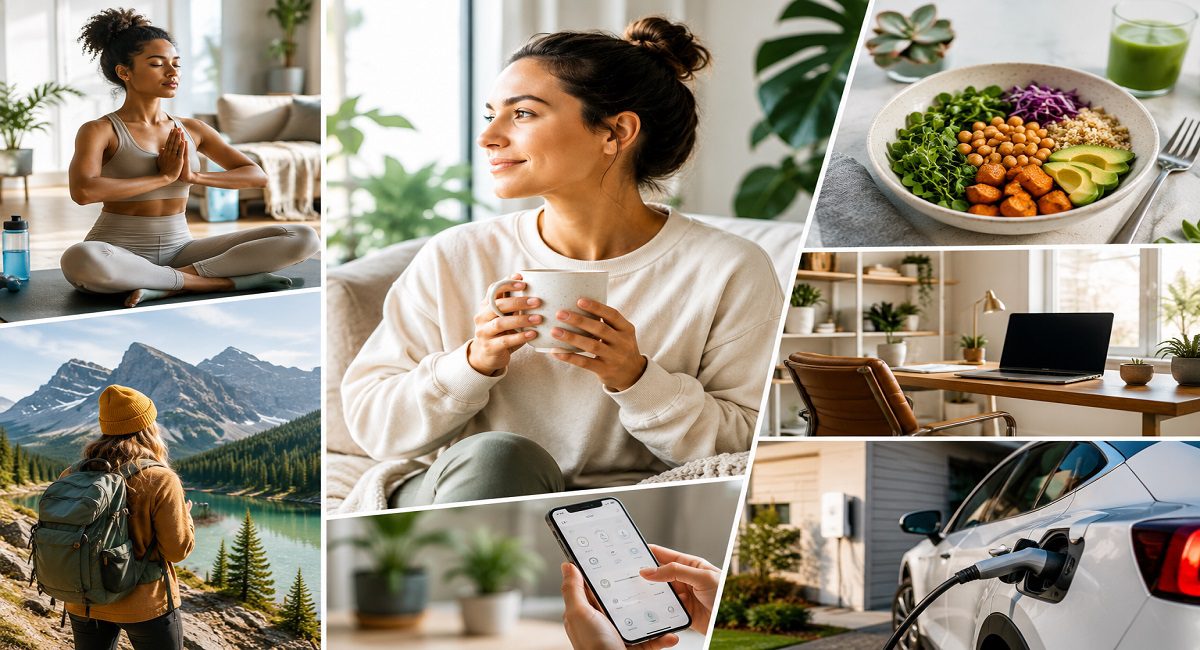
In 2026, people aren’t simply asking, “What’s popular?” They’re asking a more interesting question: “Does this actually make my life better?”
That shift is showing up everywhere—from the foods Americans put on their plates to the way they travel, exercise, decorate their homes, use technology, and spend their free time.
Some trends are powered by social media. Others are being pushed by technology, changing health priorities, economic pressures, or a desire to slow down. Pinterest’s 2026 trend forecasting, for example, draws on billions of searches and visual interactions, while major retailers and wellness companies are also tracking changing consumer behavior.
So, what are Americans actually talking about in 2026?
Here are 15 lifestyle trends shaping everyday life in the USA right now.
1. AI Is Becoming Part of Everyday Life
Artificial intelligence is no longer just a Silicon Valley conversation.
Americans are increasingly using AI for everyday tasks—planning trips, organizing schedules, researching purchases, brainstorming meals, learning new skills, writing, and even creating personalized routines.
Recent research mapping AI usage found that AI activity now touches an enormous range of household and professional tasks in the U.S., although most workplace use remains collaborative rather than full automation.
The interesting part is that AI is becoming less of a “technology trend” and more of a personal assistant.
Instead of asking, “What can AI do?” people are increasingly asking, “What can AI do for me?”
2. Longevity Is Replacing Quick-Fix Wellness
Forget simply wanting to “look good.”
A growing number of Americans are thinking about how to stay healthy, energetic, and independent for as long as possible.
That’s driving interest in longevity programs, wearable technology, preventive health, sleep tracking, personalized nutrition, and health data.
The longevity industry is expanding beyond expensive gadgets toward personalized platforms that combine biometrics, lab information, imaging, and AI-generated insights.
But there’s another important development: Americans are becoming skeptical of extreme biohacking.
A 2026 survey reported that most people prefer practical, affordable improvements such as exercise, healthier eating, sleep, and preventive screenings rather than complicated optimization routines.
In other words, longevity is becoming less about doing everything and more about doing the basics consistently.
3. Protein Is Still Having a Major Moment
Walk through an American grocery store and you’ll notice one word everywhere:
Protein.
Protein-packed snacks, drinks, yogurts, cereals, bars, frozen meals, and desserts continue to attract attention.
But in 2026, protein is sharing the spotlight with another nutrient: fiber.
Whole Foods Market’s 2026 trend forecast highlights a growing “focus on fiber,” connecting it to interest in gut health, digestive wellness, and feeling fuller for longer.
This represents a broader shift in American food culture.
Instead of simply counting calories, consumers are increasingly asking:
“What’s actually in this?”
4. GLP-1 Is Changing More Than Weight Loss
Medications such as Ozempic, Wegovy, Mounjaro, and Zepbound have become a major part of the American health conversation.
Their influence is extending beyond medicine into food, fitness, fashion, and even home design.
Food companies are developing products with higher protein and carefully designed portions for consumers using GLP-1 medications. Reuters recently reported that Nestlé is developing products aimed at supporting the nutritional needs of people taking these drugs.
Even homes are being affected.
Designers are seeing changes in how some GLP-1 users think about kitchens, closets, bathrooms, and wellness spaces following significant weight loss.
Whether this trend continues at the same speed remains to be seen, but its cultural impact is already difficult to ignore.
5. “Slow Living” Is Becoming a Luxury
Americans are increasingly discovering something surprisingly radical:
Doing less can feel good.
After years of hustle culture, nonstop notifications, side hustles, and packed calendars, slow living is gaining appeal.
That can mean cooking dinner instead of ordering takeout, reading a physical book, taking an evening walk, gardening, spending time outdoors, or simply having an unscheduled weekend.
The goal isn’t laziness.
It’s intentional living.
For many people, having free time has become more valuable than having another appointment on the calendar.
6. Digital Detoxes Are Getting More Popular
Smartphones were designed to make life easier.
But after years of constant notifications, many Americans are trying to create boundaries with their screens.
Digital detoxes can range from putting the phone away during meals to spending an entire weekend offline.
The new status symbol isn’t necessarily having the latest device.
It may be being able to ignore it.
Even wellness experts increasingly encourage breaks from social media and news as part of managing stress.
The 2026 version of wellness may therefore include something very simple:
less scrolling.
7. Home Cooking Is Getting a Social-Media Makeover
Traditional recipes aren’t disappearing.
They’re evolving.
TikTok, Instagram, YouTube, and other platforms have become modern cooking classrooms for millions of Americans.
A recent U.S. survey found that social media is strongly influencing how Americans discover recipes and cooking ideas, with many respondents using platforms as a kind of modern cookbook.
This has created a fascinating combination:
convenience + creativity + customization.
People are taking familiar foods—instant noodles, frozen pizza, sandwiches, pasta—and turning them into personalized creations.
You don’t necessarily need to be a professional chef.
You just need an idea and a camera.
8. Pickle Flavor Is Everywhere
Yes, really.
Pickle-flavored foods have moved far beyond the pickle jar.
Snacks, chips, noodles, drinks, and other unexpected products are embracing the tangy flavor. Recent reporting says sales of pickle-flavored snacks have grown substantially, with social media helping accelerate the trend.
Why does it work?
It’s bold.
It’s nostalgic.
And it’s incredibly easy to turn into viral content.
Whether pickle mania survives into 2027 is another question—but in 2026, the pickle is definitely having its moment.
9. Nostalgia Is Back—But With a Modern Twist
Americans are increasingly revisiting the past.
Old-school fashion, retro home décor, classic snacks, vintage-inspired design, vinyl records, and throwback entertainment continue to attract attention.
But this isn’t simply copying the past.
The 2026 version of nostalgia mixes old and new.
Think vintage furniture with smart-home technology.
Retro clothing with modern sneakers.
Classic recipes recreated with healthier ingredients.
The appeal is emotional: familiar things can provide comfort in a world that changes extremely quickly.
10. Travel Is Becoming More About Experiences
For many Americans, travel is moving away from simply collecting destinations.
Instead, people increasingly want experiences they will actually remember.
That could mean a small-town road trip, a food-focused vacation, a wellness retreat, a nature escape, or a quiet weekend somewhere without a packed itinerary.
Even stargazing is emerging as a wellness travel experience, with hotels and retreats offering astronomy-inspired activities designed around relaxation and connection with nature.
The new travel question isn’t necessarily:
“Where should I go?”
It may be:
“How do I want to feel when I come back?”
11. The “Anti-Itinerary” Vacation
Another interesting travel shift is the desire to stop overplanning.
Instead of creating a spreadsheet with every restaurant, museum, tour, and activity, some travelers are deliberately leaving space for spontaneity.
Sleep late.
Find a local café.
Walk around.
Change plans.
Follow a recommendation from someone you meet.
This approach reflects a wider cultural movement toward less pressure and more authentic experiences.
A vacation doesn’t have to become another productivity project.
12. Smart Homes Are Becoming More Human
The future home isn’t just about controlling lights with your phone.
It’s increasingly about homes that anticipate what residents need.
AI-powered appliances, connected systems, better energy efficiency, built-in charging, smart organization, and wellness-focused spaces are influencing home design in 2026.
Imagine a kitchen that helps organize groceries.
A bedroom designed around better sleep.
Lighting that adjusts throughout the day.
Appliances that simplify repetitive chores.
The trend is moving from “look how futuristic my house is” to:
“my house makes my life easier.”
13. Functional Foods Are Getting Bigger
Americans aren’t only interested in food that tastes good.
Increasingly, they want food that seems to do something.
That might mean protein, fiber, probiotics, electrolytes, vitamins, minerals, or other functional ingredients.
Whole Foods Market’s 2026 predictions reflect this broader interest in functional ingredients and foods designed around specific consumer needs.
But consumers should be careful with exaggerated health claims.
A trendy label doesn’t automatically mean a product has dramatic health benefits.
The smarter trend is becoming an informed consumer—not simply buying whatever goes viral.
14. “Wellness” Is Moving Into Everyday Spaces
Wellness used to mean going to a spa or gym.
Now it can mean redesigning your entire environment.
Americans are increasingly thinking about how bedrooms, bathrooms, kitchens, outdoor spaces, lighting, air quality, and technology affect daily well-being.
That means wellness is becoming less of an occasional activity and more of a home lifestyle philosophy.
A comfortable chair.
A quiet bedroom.
Natural light.
A walking-friendly neighborhood.
A kitchen that makes healthy cooking easier.
Sometimes wellness isn’t another thing you add to your schedule.
It’s something you build into your surroundings.
15. Americans Are Choosing Sustainable, Realistic Wellness
Perhaps the biggest lifestyle trend of 2026 is also the simplest:
People are getting tired of extreme advice.
Not everyone wants a $500 wellness gadget.
Not everyone wants to wake up at 4:30 a.m.
Not everyone wants a 20-step morning routine.
And not everyone needs to.
Current consumer research suggests Americans are increasingly interested in manageable, affordable, evidence-based habits rather than extreme longevity or biohacking approaches.
That could be the healthiest trend of all.
Walk more.
Sleep enough.
Eat better.
Spend time with people you love.
Take breaks from your phone.
Get outside.
Find work you care about.
Make your home comfortable.
Travel when you can.
And don’t forget to enjoy your life while you’re trying to improve it.
The Bigger Picture: What These 2026 Lifestyle Trends Really Mean
At first glance, these trends seem completely unrelated.
AI.
Protein.
Pickles.
Longevity.
Digital detoxes.
Smart homes.
Slow travel.
But look closer and there’s a common theme.
Americans are searching for better ways to live in a world that increasingly feels fast, complicated, and digitally overwhelming.
Technology is becoming more powerful, but people are also craving nature.
Health tracking is becoming more sophisticated, but people want simpler wellness routines.
Travel is becoming easier to book, but travelers want more authentic experiences.
Food companies are developing increasingly complex products, while consumers are rediscovering fiber, traditional ingredients, and home cooking.
Even the biggest trends are pointing toward the same question:
How can technology and modern life help us live better—not simply live faster?
That may be the defining American lifestyle trend of 2026.
And if there’s one lesson worth taking from all 15 trends, it’s this:
The future of lifestyle isn’t necessarily about having more. It’s about choosing better.
Better food.
Better sleep.
Better experiences.
Better technology.
Better relationships.
Better use of your time.
And, perhaps most importantly, a life that actually feels like your own.
Note: Lifestyle trends change quickly. Some trends mentioned above are emerging movements or industry forecasts rather than universal behaviors among all Americans. Individual experiences and health decisions can vary, so viral wellness claims should not be treated as medical advice.
Leave a Reply